Color and light in adult AI photography
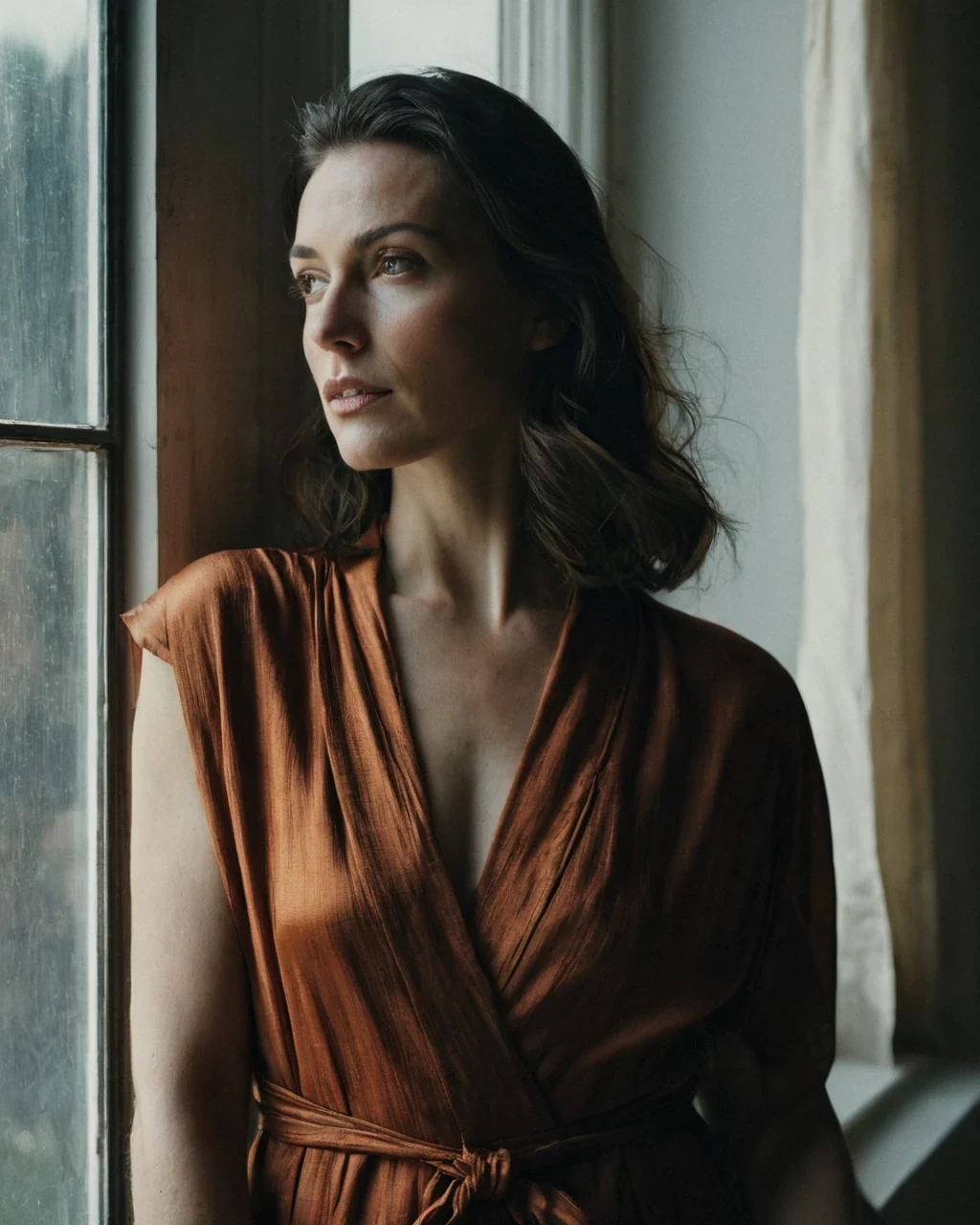
Light must belong to the room. A window, softbox, bedside lamp, neon sign, or sun gives the model a source it can place. Then describe direction, size, temperature, and fill. Restrict the palette to a base, a skin-safe neutral, and one accent so wardrobe and background do not compete. Build a first draft in the studio, then test one change at a time. Small tests show what each word does.
Motivate every source
One clear key is easier to solve than several decorative glows.
- Name the source and its position.
- State whether shadows stay open or fall deep.
- Let practical fixtures appear only when they explain visible light.
Use temperature for separation
Warm skin against a cooler room creates depth without changing pose.
Daylight
Neutral to cool environment with honest skin color.
Tungsten
Warm privacy and soft domestic atmosphere.
Mixed light
Use deliberately, with one source clearly dominant.
Review skin and fabric
Check that darker and lighter skin retains detail without gray casts, clipped highlights, or orange contamination. Silk, latex, lace, linen, leather, and sweat each need different highlight control. The skin guide covers the close review.
Name the ratio, not just the source
Saying softbox describes equipment, the way naming a lens does in camera direction. Saying how much darker the shadow side falls describes a photograph.
Low contrast, around 2:1
The shadow side stays open and detailed. Commercial, gentle, and forgiving of skin. This is the default for catalogue and lingerie work.
Standard, around 4:1
A visible shadow side that still holds detail. Reads as a deliberately lit portrait rather than an accident.
High contrast, 8:1 and beyond
The shadow side goes near black. Strong, editorial, and unforgiving: Anything wrong with the pose is now the only thing in the light.
| Ratio | Reads as | Suits |
|---|---|---|
| 2:1 | Open, soft, commercial | Catalogue, lingerie, beauty |
| 4:1 | Shaped, considered | Portrait, campaign hero |
| 8:1 | Dramatic, editorial | Noir, boudoir, art direction |
Light the material, not just the person
Skin is one surface in the frame, and it has its own guide. Fabric, metal and sweat each answer to light differently, and one key rarely flatters all of them at once.
Silk and satin
Show light as a long soft band. They need a broad source and something dark to reflect, or the sheen has nothing to shape it.
Lace and mesh
Read through backlight. Light them only from the front and the pattern disappears into the skin behind it.
Latex and leather
Return small bright specular hits. A large source turns them into a mirror, so keep the key smaller and further away.
Wet or oiled skin
Multiplies every highlight. Drop the key size and the fill together, or the frame blows out along the shoulders.
Keep light consistent across a set
A contact sheet falls apart when the light moves between frames. Six values hold a set together across a whole contact sheet, and they are worth writing down once.
- Source and its size, named the same way every time.
- Direction and height, relative to the subject rather than the room.
- Softness, stated as hard, soft, or diffused through something specific.
- Colour temperature, and whether the background is warmer or cooler than the skin.
- Fill, as a ratio rather than as a feeling.
- White balance, held constant so skin tone does not wander between frames.
What to check before you accept the light
Run the production review checklist over the set before you publish. Then read the skin and lighting guide.
- Every source is motivated by something in the room.
- Temperature separates subject from background.
- Skin holds colour variation rather than one flat tone.
Color and light in adult AI photography: common questions
Why does the image look flat?
The key has no direction or the fill is too strong.
How many colors should lead?
Usually one base family and one accent, plus believable skin neutrals.
Can lighting stay consistent across a series?
Yes. Repeat source, side, height, softness, temperature, fill ratio, and camera white balance.
What is a lighting ratio in plain terms?
How much darker the shadow side of the face is than the lit side. A 4:1 ratio means the shadow side receives about a quarter of the light.
Can one key light cover a whole scene?
For a portrait, usually yes. Once a second material like latex or lace is in the frame, a small second source normally does more than enlarging the key.
Why does my skin tone shift between frames?
White balance is moving with the scene. Fix it explicitly and keep the same value across the set, then correct once at the end if you need to.
Where to go next
This guide pairs with skin under light, beauty lighting and camera direction.