Plan an adult AI stock contact sheet
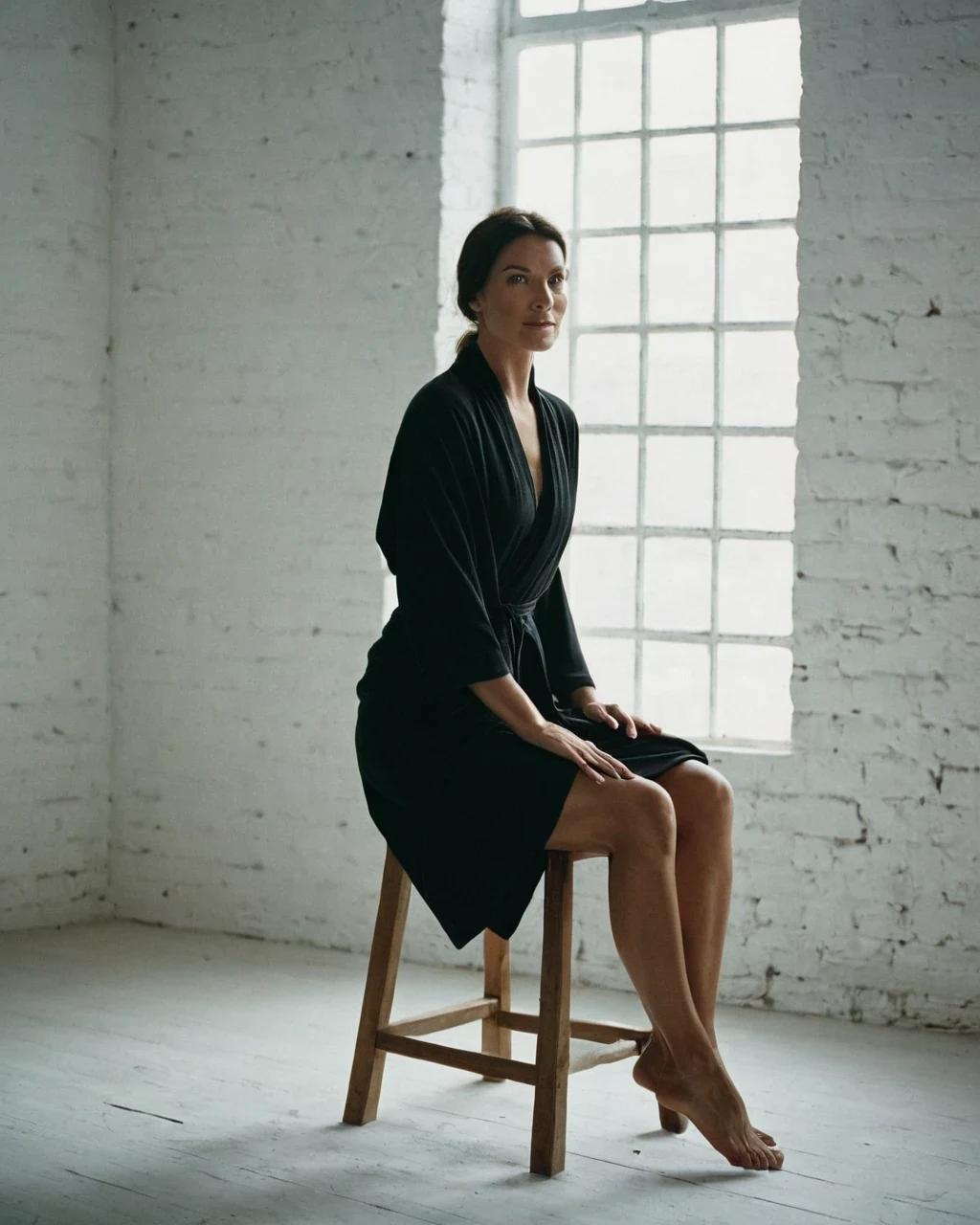
One attractive portrait is not a stock collection. Contact sheet planning means deciding the deliverables before generation: A hero, wider environment, full-body frame, horizontal copy-space option, vertical crop, expression alternate, and useful detail. Keep the synthetic adult identity, wardrobe system, location, and light fixed across the sheet. Build a first draft in the studio, then test one change at a time.
Write the shot list
Give every frame a job and avoid near-duplicates.
- Hero: Strongest eye line and clean silhouette.
- Environment: Place, activity, and wider context.
- Copy space: Quiet area for a buyer's text.
- Detail: Garment, hands, accessory, texture, or product.
Change one axis per frame
Move camera distance, orientation, gaze, or action, but do not change everything together.
Identity
Never changes.
Continuity
Wardrobe, grooming, time of day, and source direction stay stable.
Variation
Crop, action, expression, and copy-space side can move.
Review the sheet, not isolated peaks
Reject duplicates, face drift, inconsistent fabric, changing room geometry, and mismatched color. Contact Sheet Maker assembles the final review board; metadata guidance prepares delivery.
A clean production pass
A contact sheet is reviewed as a set, not frame by frame. Work down the whole sheet once for each check below, rather than perfecting one image and moving on.
Identity check
Keep the exact adult age, face anchors, hair, build and skin cues stable across every frame. The person must stay original and synthetic, and must not resemble a real individual.
Image check
Inspect eyes, fingers, teeth, fabric, joints, reflections and background edges at full size. Fix the largest fault first; the rest often follow from it.
Stock check
Export a hero crop, a copy-space crop and a vertical crop. Write plain alt text. Save the model, seed, prompt and date, so the set can be reproduced and licensed later.
Quick checklist
A short list catches more faults than one long prompt.
- The subject reads as a mature adult at a glance.
- The identity is original and does not resemble a real person.
- The framing, crop, light and intended use are clear.
- Hands, fabric, skin and contact points make sense.
- The final file has useful metadata and provenance.
Budget the sheet before you spend a credit
A contact sheet is a production, and productions have arithmetic. Deciding the numbers first is what stops a set ending at nine usable frames out of forty.
Decide the deliverable count first
A buyer usually wants six to twelve frames from one setup. Work back from that rather than generating until something good appears.
Assume a real reject rate
Plan on roughly one keeper in three on a difficult brief, and one in two once the brief settles. Anyone promising better is not counting hands. Credits are what the reject rate spends.
Spend on the hero, save on the rest
The hero frame carries the set and deserves the extra renders. Supporting frames need to be correct, not perfect.
| Slot | Frames | Renders to budget |
|---|---|---|
| Hero | 1 | 8 to 12 |
| Environment | 2 | 4 each |
| Full length | 2 | 3 each |
| Detail | 3 | 2 each |
| Copy space | 2 | 3 each |
| Spare | 2 | Whatever the rejects need |
Sequence the sheet the way a buyer reads it
A set is not a pile of frames. The order tells the buyer it came from one shoot, and a good order hides nothing.
- Open on the hero, because it sets the expectation for everything after it.
- Follow with the widest environment frame, so the place is established early.
- Group frames by setup rather than by how good you think they are.
- Put the details next to the frame they belong to, not together at the end, and tag each one as you go.
- Close on the copy-space frames, which is where a layout usually starts anyway.
Continuity errors that survive a good review
Four continuity errors survive a careful frame-by-frame review and only fail once the set is seen together.
Hair that moves without a reason
A parting that switches sides between two frames of the same setup reads as two different shoots, which is an identity problem.
Light that changes direction
Window light from camera left in one frame and camera right in the next cannot be the same morning.
Jewellery that comes and goes
The single earring you used as an identity anchor has to be in every frame of that setup, or it becomes the fault instead.
Wardrobe that resets
A strap that has fallen in one frame is still fallen in the next, unless something in the set explains why it is not.
Plan an adult AI stock contact sheet: common questions
How many frames make a useful set?
Six to ten distinct jobs are enough for a focused campaign set.
Should every image use the same seed?
Start there for identity, then record any seed change that solves a composition.
What makes two frames duplicates?
The same crop, gaze, action, and copy-space behavior, even if small styling details differ.
How many renders should a twelve-frame set cost?
Budget around forty to fifty on a brief you have not shot before, and closer to thirty once the identity and light are settled.
Should the hero be generated first or last?
First. It settles the light and the identity, and every other frame in the set inherits those decisions from it.
How do I catch continuity errors?
View the whole sheet at thumbnail size in one screen. Continuity faults are invisible frame by frame and obvious side by side.
Where to go next
This guide pairs with assemble a contact sheet, hold identity, deliver the set and what we are shooting.