Holding one AI model across a whole shoot
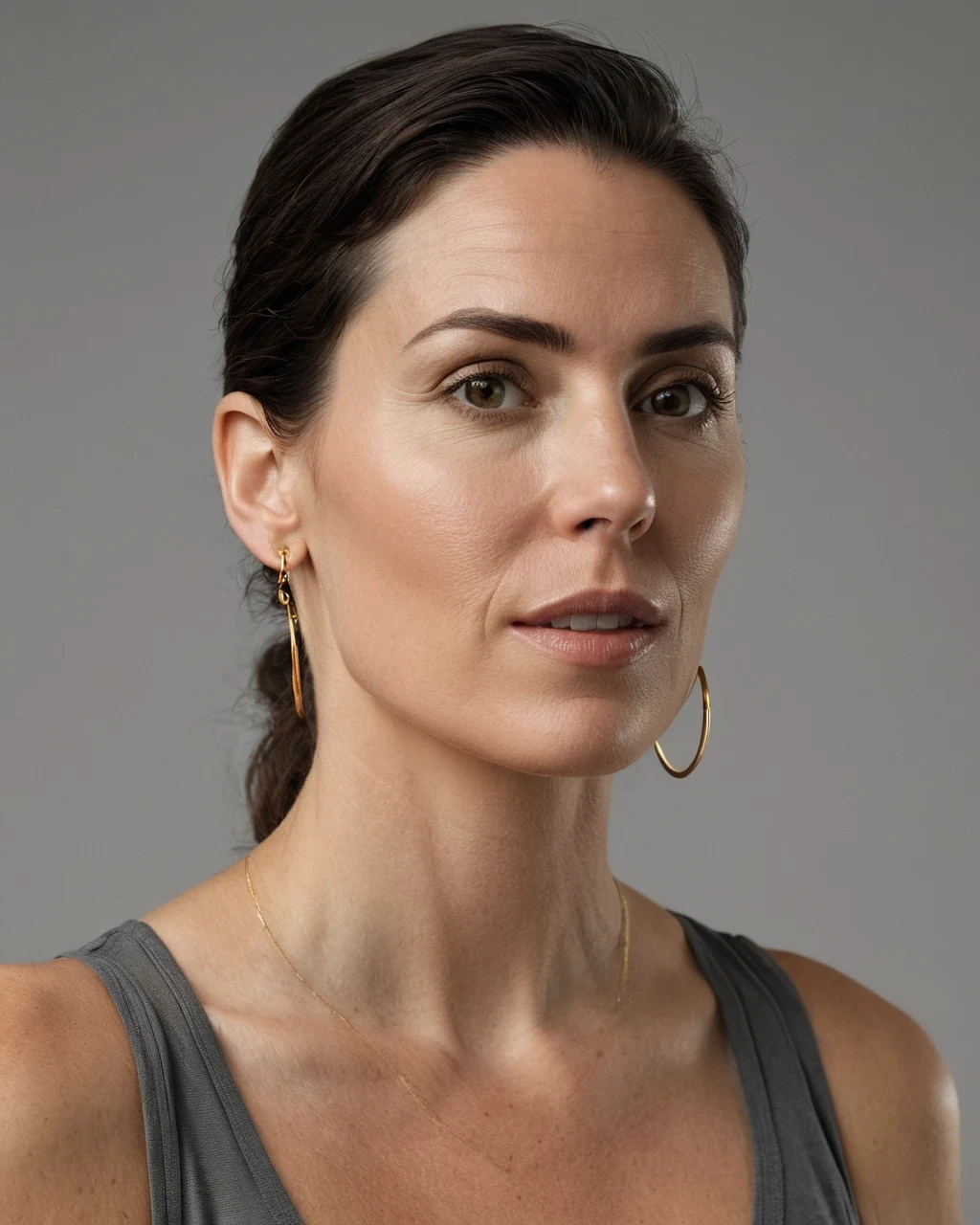
A stock buyer does not want one photograph. They want a set: The same woman at the window, at the desk, in the car, all clearly one person. That is the hardest thing to do here, and it is a workflow problem rather than a wording problem. Build the identity once in the studio, write down what held it, and reuse both.
Why a face moves between frames
A prompt does not describe one face. It describes a range of faces, and the seed picks one point inside that range. Change the room and the range moves with it.
- The seed fixes the draw. Same seed, same anchors, same face. Lose it and you are casting a new model.
- Scene words compete. "Rain-lit balcony" spends attention that was holding her jaw. The longer the location, the further she drifts.
- Order decides priority. Identity in the first clause survives. Identity in the last clause is a suggestion.
Cast her once, then stop describing her
Three or four hard traits do more than twenty soft ones. Pick features a photograph would actually record.
- Age and bone structure - A stated age and one jaw or cheekbone note.
- One unrepeatable detail - A beauty mark, a scar, a gap in the teeth. Generic beauty words hold nothing.
- Hair as shape, not colour - "Blunt shoulder-length bob" survives redrawing; "brown hair" does not.
| Anchor | How well it survives a new scene |
|---|---|
| Seed | Completely, if nothing else changes |
| Stated age | Very well |
| One odd feature | Very well |
| Hair shape | Well |
| Eye colour | Poorly on its own |
| Beauty adjectives | Not at all |
Move the scene, not the model
Once a frame is right, change one thing. A new location is a new render; a new jacket is an outfit change on the frame you already have.
- Reuse the seed and the anchors verbatim, then append the new location.
- For wardrobe, expression or background, edit the finished frame instead. It cannot drift if it is never redrawn.
- Upscale last. An upscaled frame is harder to edit and costs more to re-run.
Know when it is close enough
Frame-perfect identity is not achievable today, and chasing it burns credits. Stock buyers accept what a real shoot delivers: The same person under different light.
Write the identity block once, then treat it as fixed
Consistency is a copy-and-paste discipline. The block below is the unit you reuse, unchanged, in every brief of the set.
Two face anchors
Pick features a model can actually hold: A scar through an eyebrow, a gap between the front teeth, a mole below one eye. The blueprint shows where the block sits. Vague beauty does not anchor anything.
Structure, not adjectives
Jaw, cheekbones, nose bridge, brow. These survive a change of light. Pretty does not.
Hair as a construction
Length, texture, parting, and how it is worn today. Hair is the first thing to drift when you retype it from memory.
One unchanging detail
A single earring, a chipped nail, a thin chain. It gives you something binary to check in every frame.
| Anchor | Holds | Notes |
|---|---|---|
| Seed | Strongly | Same seed plus same identity text is the tightest pairing available |
| Named face marks | Strongly | Two is enough, and four start competing |
| Hair construction | Well | Drifts if you paraphrase it |
| Age statement | Well | Drops out under soft light unless restated |
| Wardrobe | Weakly | Changes freely by design, so never anchor on it |
Repair drift without starting over
When frame nine stops looking like frame one, work back in this order rather than rewriting the brief.
- Compare against frame one at full size, not against frame eight. Drift accumulates quietly.
- Restore the identity block verbatim from the saved original.
- Put the age statement back if a soft-light clause pushed it out.
- Return to the original seed before changing anything creative.
- Only then consider a face-match pass in the character studio.
Worked example: a model you can shoot again next week
| Model | ImageFap AI V1 (holds structure) |
|---|---|
| Image size | Portrait 4:5 - 1024x1280 |
| Seed | Let it choose once, then write it down |
The exact instruction
raw photo, adult woman age 34, square jaw, silver undercut, small scar through her left eyebrow, single jade earring, charcoal wool coat over a black slip, neutral grey studio backdrop, even north light, 85mm medium portrait, natural pores
What comes back
A neutral backdrop and flat light so nothing competes with the casting. The undercut, the scar and the earring are what survive into the next frame. Swap only the last two clauses to move her somewhere else.
Holding one AI model across a whole shoot: common questions
Can I get an identical model in every photo?
Not exactly, and no real shoot does either. With the seed and three anchors held you get a set a stock buyer reads as one person, which is the useful bar.
Which anchor matters most for a consistent AI model?
The seed, then one feature nobody else would have. A scar or a gap in the teeth outperforms every beauty adjective ever written.
Should I edit a photo or render a new one?
Edit whenever the identity must not move. Wardrobe, expression and background all change safely on a finished frame; a fresh render re-casts the face.
Why did she change when I only added a location?
Because the location took attention the identity was using. Put the anchors back in the opening clause and shorten the scene.
How many face anchors should I write?
Two, occasionally three. Beyond that they compete for attention and the model starts trading one for another.
Does the wardrobe help hold identity?
No, and it should not. Wardrobe is the thing you want free to change across a set, so anchoring on it defeats the purpose.
Why does she drift after several frames?
Small paraphrases compound. Each render is close to the last, and the tenth is a long way from the first. Always compare back to frame one.
Where to go next
This guide pairs with build the model, open the studio, change expression safely, change wardrobe safely and licensing a series.