The adult AI stock prompt blueprint
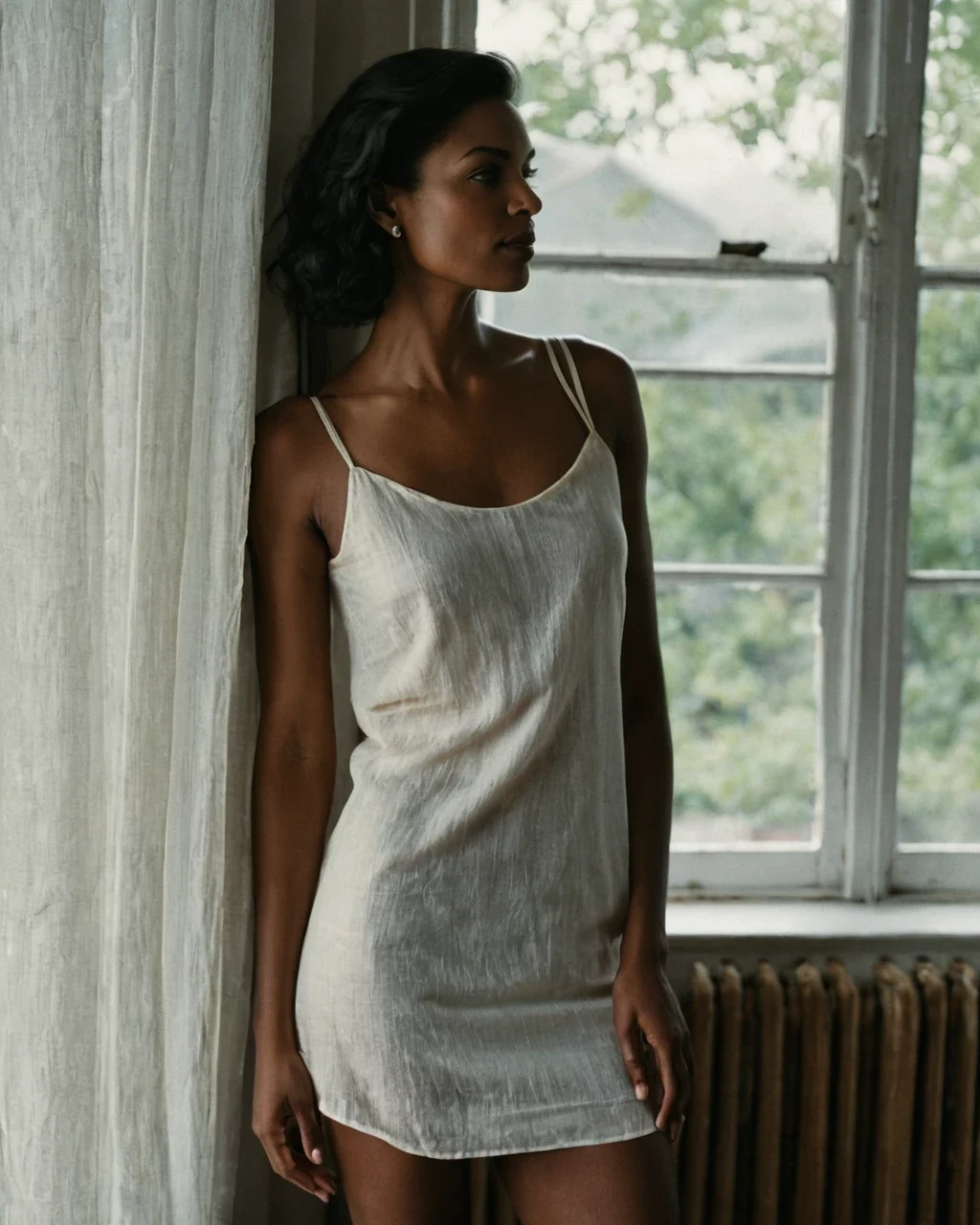
A long prompt is not automatically precise. A useful adult-stock prompt has seven blocks: identity, action, wardrobe, environment, camera, light and finish. Put the non-negotiable person first. Put delivery needs last. If a result fails, edit the block that owns the fault instead of rewriting everything. Build a first draft in the studio, then test one change at a time. Small tests show what each word does.
Blocks one to three: Person
Start with exact adult age and original identity, then action and wardrobe.
- Identity: Face anchors, hair, build, skin, grooming.
- Action: Weight, hands, gaze, contact, and movement phase.
- Wardrobe: Construction, material, fit, coverage, and color.
Blocks four to six: Photograph
Place the person, position the camera, and motivate the light.
Environment
One readable location and two supporting details.
Camera
Lens, distance, height, angle, focus, and aspect ratio.
Light
Key source, direction, softness, fill, temperature, and practicals.
Block seven: Finish and use
Request natural pores, believable fabric, clean hands, restrained retouching, and the actual stock job. A campaign hero, catalog frame, social crop, and editorial portrait need different negative space. Save the final brief with its seed.
A worked brief, block by block
Here is the seven-block structure filled in for one real job: A vertical lingerie hero with room for a headline.
Blocks one to three
An original synthetic woman, age 34, warm mid-brown skin, dark shoulder-length hair pushed back, a small scar through one eyebrow. She stands with her weight on her back foot, one hand resting flat on a windowsill, looking away from the lens. Ivory silk slip, bias cut, thin straps, hem at mid-thigh.
Blocks four to six
A quiet bedroom in the early morning: Unmade linen, a glass of water on the sill. Shot at 85 mm from chest height, three-quarter length, vertical 4:5, shallow focus holding both eyes. A large north-facing window is the key, coming from camera left, soft and slightly cool, with the shadow side left open.
Block seven
Visible pores, fine hair at the hairline, believable silk with weight and wrinkle, restrained retouching. Quiet space above her head for a headline. This is a campaign hero, so nothing crowds the top third.
When the block is right but the frame is wrong
A correct brief can still produce an unusable frame, and the fix is usually mechanical rather than creative.
- Right person, wrong scale: The camera block named a lens but no distance or crop.
- Right light, no depth: Key and fill are named but no direction separates her from the wall, which the lighting guide works through.
- Right pose, dead hands: Hands were never given a job, so they float.
- Right frame, no copy space: The finish block never said where the text goes.
| Symptom | Block that owns it |
|---|---|
| Face drifts younger | One - Identity and exact age |
| Pose looks posed | Two - Weight, contact and gaze |
| Garment reads like paint | Three - Construction and material |
| Location is vague | Four - Environment detail |
| Everything is in focus | Five - Camera and aperture |
| Image looks flat | Six - Key direction and fill |
| Unusable for the job | Seven - Finish and purpose |
Lock the blocks you are not testing
The blueprint earns its keep across a set, not on one render. Fix everything you are not questioning and the difference between two frames means something.
Freeze the identity block verbatim
Copy and paste it. Rewriting it from memory changes a word, and one word changes a face.
Hold the seed, model and dimensions
These three decide how much of the frame is even allowed to move between renders. The model guide covers how each checkpoint behaves.
Change exactly one block per test
Then record which block you moved and what happened. After a dozen renders that record is worth more than the images.
What a finished brief has in it
Run the production review checklist over the set before you publish. Then read the model prompting guide.
- Who is in the frame, with an explicit adult age.
- What they are doing, written as a held position.
- Where it is, and how it is lit.
Add a commission handoff block
A buyer brief can travel with the creative prompt. Record campaign code, intended audience, publication channel, geographic territory, placement duration, crop inventory, headline zone, logo clearance, wardrobe approval, color references, accessibility needs, file format, pixel target, deadline, reviewer, and revision owner.
- Separate required deliverables from optional alternates.
- Mark trademark exclusions and product visibility before rendering.
- Name who approves casting, styling, retouch, captions, and final export.
The adult AI stock prompt blueprint: common questions
Where should negative terms go?
After the positive photographic brief, using a short list tied to actual failure modes.
Can I reuse the blueprint?
Yes. Lock the identity block and swap only job, environment, camera, or wardrobe.
What should remain fixed in a test?
Model, seed, dimensions, identity, and every clause unrelated to the change.
Do the blocks have to run in that order?
Yes for the first three. Identity, action and wardrobe hold much better at the front of a brief. The photographic blocks tolerate being moved.
What if two blocks contradict each other?
The earlier one usually wins, but not reliably. Resolve it in the text rather than leaving the model to choose.
Can one blueprint cover a whole campaign?
Yes. Lock blocks one to three, then vary environment, camera and finish per deliverable. That is what makes a set look like one shoot.
Where to go next
This guide pairs with model prompting, targeted exclusions and identity blocks.