A guide to prompting adult AI models
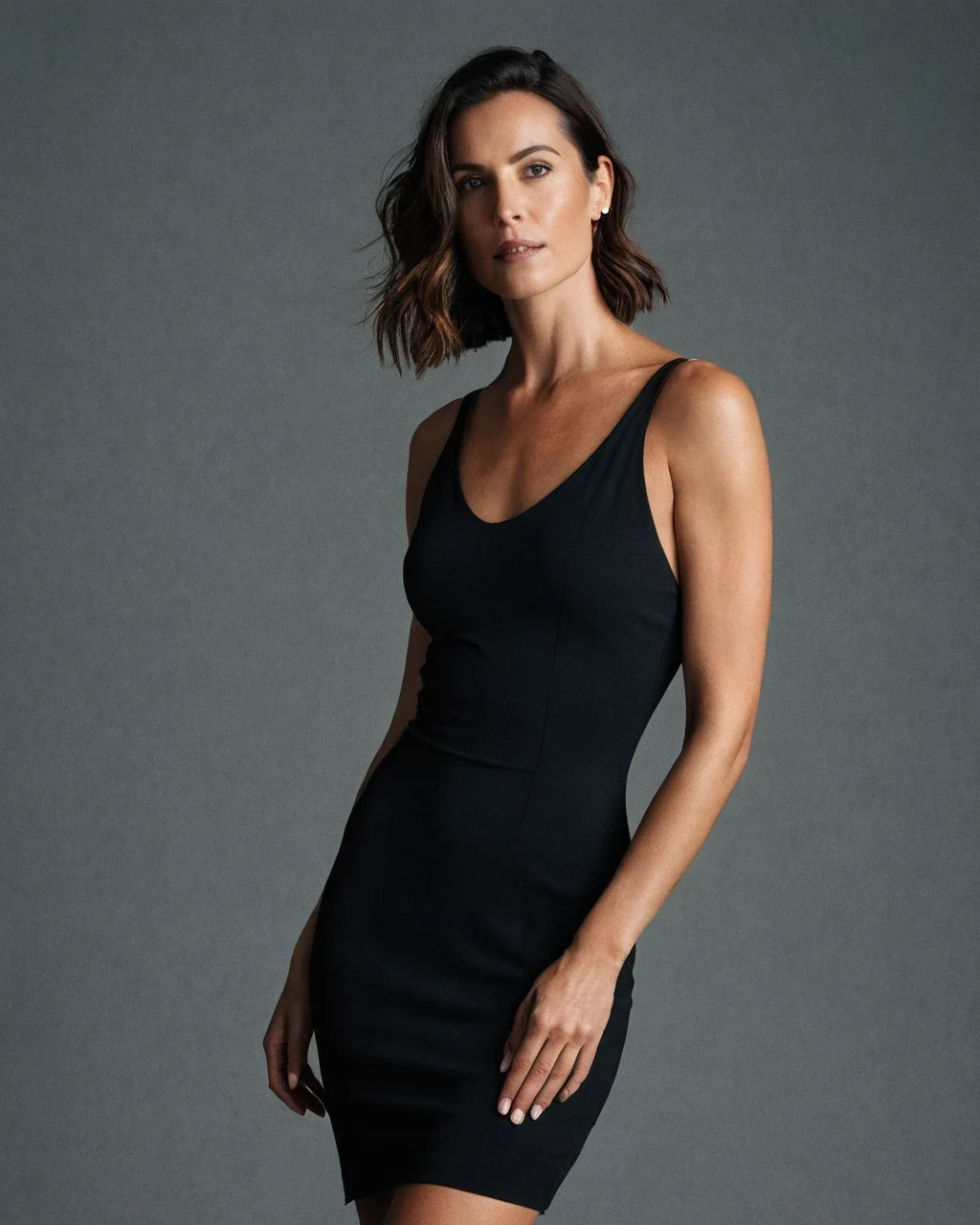
Both models accept natural language, but they reward visible decisions. Start with an original synthetic adult and exact age. Add what the person is doing, where the camera stands, and why the image exists. Then name one lens, one main light, useful texture, and a crop. Build a first draft in the studio, then test one change at a time. Small tests show what each word does. Name the adult and the room. Pick one lens, one light, one change per render.
Write the person first
Describe one original identity before mood or styling.
- Use an exact age above 25 and mature facial structure.
- Name two face anchors, hair, build, and grooming.
- Keep the identity unrelated to any real person.
Turn the brief into a photograph
A camera and light decision do more than another beauty adjective.
Lens
35–50 mm for environment; 85–105 mm for portrait compression.
Light
Name source, direction, softness, and color temperature.
Frame
State headshot, three-quarter, full body, horizontal copy space, or vertical hero.
Test one clause at a time
Keep the model, seed, and dimensions fixed. Change only the clause tied to the visible fault. Compare full-size results and record what moved. The prompt blueprint gives a reusable worksheet.
Put the load-bearing words early
Both checkpoints weight the front of a brief more heavily than the tail, so clause order is a real control and not a matter of taste.
What belongs in the first line
The subject and the adult age. If the person arrives late, the model has already committed to a composition and has to bend the identity to fit it.
What belongs in the middle
Action, wardrobe and environment. These describe the picture and can be revised without disturbing who is in it.
What belongs at the end
Camera, light, finish and exclusions. They shape the render rather than invent it, and they survive being moved. Exclusions belong here too.
| Position | Holds up well | Gets diluted |
|---|---|---|
| First line | Identity, exact age, body type | Nothing - This is the strongest slot |
| Middle | Action, wardrobe, location | Fine detail on small props |
| Tail | Lens, light, grain, crop | Anything about who the person is |
Match the fault to the clause that owns it
Match the fault to the clause that owns it and you fix one line instead of rewriting the brief. Most failed renders are one wrong clause, and naming the fault out loud usually names the fix.
- The face reads too young: The age clause is competing with soft light and a smooth-skin adjective.
- The pose looks boneless: No clause says which foot carries the weight.
- The room is generic: The environment has a label but no two supporting details.
- Skin looks like plastic: Retouching words outrank the texture words, or there are none at all. The skin guide covers the fix.
- The crop is wrong: Framing was never stated, so the model chose one.
Length is not the same as precision
A brief gets better by being more specific, not by being longer. Past roughly eighty words the extra clauses mostly compete with each other.
Repetition does not add weight
Saying photorealistic four times does not make a render four times more photographic. It just spends attention that a lighting clause could have used.
Adjective stacks cancel out
Stunning, gorgeous, perfect and flawless all point at the same vague place. One concrete noun beats four opinions.
Contradictions quietly win
Soft flawless skin and visible pores cannot both hold, which is what a targeted exclusion list is for. The model picks one, usually the one you wrote first, and you get a result you did not ask for.
What to check after each render
Run the production review checklist over the set before you publish. Then read what negative prompts can fix.
- One clause changed, so you know what caused the difference.
- The person is described before the scene is.
- The light has a named source.
A guide to prompting adult AI models: common questions
Does the prompt writer allow adult language?
The configured non-censored text model can write adult briefs, which still pass prohibited-content checks.
Should I use tags or sentences?
Use clear natural-language clauses; short technical tags can be added where the checkpoint responds to them.
How do I keep a person consistent?
Save the exact identity block, model, seed, and dimensions together.
How long should an adult AI prompt be?
Roughly forty to eighty words covers identity, action, place, camera and light without clauses fighting each other. Go longer only when a job genuinely needs it.
Does repeating a word make it stronger?
No. Repetition spends attention without adding control. Replace the repeated adjective with a concrete noun or a camera instruction.
Why did adding detail make the image worse?
The new detail probably contradicted something already in the brief. Remove the newest clause first and re-render before trying anything else.
Where to go next
This guide pairs with prompt worksheet, five model behaviors and test the brief.